

Uncategorized
Understanding What is Medical Cannabis Dosage
Sep
Figuring out the right medical cannabis dosage can feel overwhelming. With countless product types and widely different effects, many people think it is nearly impossible to get it right. Yet studies show that mean symptom severity drops between 2.8 and 4.6 points when dosages are dialed in for individual needs. The real surprise is that success has very little to do with stronger products or higher doses. It comes down to understanding your body, matching the method to your symptoms, and working carefully with a professional. That is where real progress happens.
Table of Contents
- Defining Medical Cannabis Dosage: Key Terms And Concepts
- The Importance Of Proper Dosage In Medical Cannabis Use
- How Different Factors Influence Medical Cannabis Dosage
- Types Of Medical Cannabis Products And Their Dosage Guidelines
- Real-World Impact: Patient Experiences And Case Studies
Quick Summary
| Takeaway | Explanation |
|---|---|
| Understanding dosage is critical | Proper medical cannabis dosage ensures safe and effective therapeutic treatment tailored to individual needs. |
| Personalized approach is essential | Factors like patient history and response variation necessitate individualized treatment plans for optimal outcomes. |
| Monitor and adjust dosages carefully | A gradual adjustment strategy helps identify the best therapeutic range while minimizing side effects. |
| Understand administration methods | Different consumption methods affect absorption rates, onset times, and the therapeutic impact of cannabis. |
| Beware of dosage risks | Incorrect dosages may lead to health complications and reduced treatment efficacy, highlighting the need for precise management. |
Defining Medical Cannabis Dosage: Key Terms and Concepts
Medical cannabis dosage represents a complex framework of measurement and administration designed to optimize therapeutic outcomes while minimizing potential side effects. Understanding the fundamental concepts behind dosage helps patients and healthcare professionals navigate medical cannabis treatments more effectively.
Understanding Cannabis Concentration and Measurement
Medical cannabis dosage fundamentally involves quantifying active cannabinoid compounds, primarily THC (tetrahydrocannabinol) and CBD (cannabidiol). According to the National Cancer Institute, dosage measurement requires precise calculation of milligrams of active ingredients, which varies dramatically based on several critical factors:
- Patient’s specific medical condition
- Individual metabolic response
- Method of cannabis administration
- Concentration of cannabinoid compounds
- Patient’s previous cannabis experience
Dosage Titration and Therapeutic Window
Dosage titration represents a systematic approach to finding an optimal medical cannabis treatment level. This method involves gradually adjusting cannabinoid intake to discover the most effective and least intrusive therapeutic range.
Medical professionals recommend a “start low, go slow” strategy to minimize potential adverse reactions and identify the most suitable dosage.
The therapeutic window describes the range of dosage where medical benefits are maximized while side effects remain minimal. This concept is crucial in medical cannabis treatment, as individual responses can vary significantly. Research published in Pharmaceuticals emphasizes that personalized dosing requires careful monitoring and incremental adjustments.
For those seeking to understand more about cannabis consumption methods, our comprehensive guide on cannabis consumption provides additional insights into administration techniques and considerations.
The Importance of Proper Dosage in Medical Cannabis Use
Proper medical cannabis dosage represents a critical aspect of safe and effective therapeutic treatment. Unlike traditional pharmaceuticals with standardized dosing protocols, medical cannabis requires a highly personalized approach that demands careful consideration and professional medical guidance.
Potential Risks of Incorrect Dosage
Incorrect medical cannabis dosage can lead to significant health complications and reduced treatment efficacy. Research from the Frontiers in Psychiatry highlights the potential consequences of inappropriate dosing:
- Insufficient dosage resulting in limited therapeutic benefits
- Excessive dosage causing unwanted side effects
- Potential exacerbation of underlying medical conditions
- Increased risk of adverse psychological reactions
- Potential interactions with other medications
Clinical Precision and Patient Safety
Medical professionals emphasize that precise dosage management is fundamental to patient safety. The complexity of medical cannabis stems from its unique interaction with individual human endocannabinoid systems, which can vary dramatically between patients. This variability necessitates a dynamic and patient-specific approach to dosing.
Understanding individual tolerance, metabolic responses, and potential drug interactions becomes crucial. Healthcare providers typically recommend a methodical approach that involves:
- Comprehensive patient medical history evaluation
- Gradual dosage introduction
- Regular monitoring and adjustment
- Continuous patient feedback assessment
To support safe consumption practices, our guide on cannabis consumption safety provides additional insights into responsible medical cannabis use. The ultimate goal remains achieving optimal therapeutic outcomes while minimizing potential risks through informed, personalized medical cannabis treatment strategies.
This table highlights key risks of incorrect medical cannabis dosage, providing a clear overview of potential negative outcomes for patients and clinicians to keep in mind.
| Potential Risk | Description |
|---|---|
| Insufficient Dosage | Leads to limited therapeutic benefits |
| Excessive Dosage | Causes unwanted side effects |
| Exacerbation of Medical Conditions | May worsen pre-existing health problems |
| Adverse Psychological Reactions | Can trigger anxiety, paranoia, or other mental effects |
| Drug Interactions | Potential for negative interaction with other medications |
How Different Factors Influence Medical Cannabis Dosage
Medical cannabis dosage is not a one-size-fits-all approach, but a complex interplay of multiple physiological and environmental factors. Understanding these nuanced influences helps patients and healthcare professionals develop more precise and effective treatment strategies.
Individual Physiological Variations
Individual human biology plays a critical role in determining appropriate medical cannabis dosage. Research published in medical journals demonstrates that several key physiological characteristics dramatically impact cannabinoid absorption and response:
- Metabolic rate and body composition
- Genetic predispositions
- Endocannabinoid system sensitivity
- Age and overall health status
- Existing medical conditions
Routes of Administration and Cannabinoid Profiles
The method of cannabis consumption significantly influences dosage effectiveness. Different administration routes produce varying absorption rates and onset times. For example, inhaled cannabis provides rapid effects, while edibles involve a slower metabolic process with extended duration.
Cannabinoid composition further complicates dosage calculations. THC and CBD ratios determine therapeutic potential and potential side effects. Some patients might require higher CBD concentrations for anxiety management, while others need balanced THC:CBD profiles for pain treatment.
For those interested in exploring different consumption methods, our comprehensive guide on cannabis edibles versus smoking offers detailed insights into administration techniques and their unique characteristics.
Environmental and Lifestyle Considerations
External factors also play a crucial role in medical cannabis dosage determination. Stress levels, diet, sleep patterns, and concurrent medications can all influence an individual’s response to cannabis treatments. Healthcare providers must consider these holistic factors when developing personalized dosage recommendations, ensuring a comprehensive approach to medical cannabis therapy.
The following table summarizes the primary factors that influence medical cannabis dosage, helping to visualize the major elements that clinicians and patients must consider in the dosing process.
| Factor | Impact on Dosage Determination |
|---|---|
| Individual Metabolism | Affects cannabinoid absorption and breakdown |
| Body Composition | Influences how cannabinoids are distributed or stored |
| Administration Method | Changes absorption speed and bioavailability |
| Cannabinoid Concentration (THC:CBD) | Alters therapeutic effects and side effect profiles |
| Medical History and Conditions | Dictates suitability and required monitoring |
| Lifestyle (Diet, Stress, Sleep) | Modulates overall therapeutic response |
| Previous Cannabis Experience | Impacts tolerance and required dosage |
Types of Medical Cannabis Products and Their Dosage Guidelines
Medical cannabis encompasses a diverse range of product types, each with unique characteristics that influence dosage, absorption, and therapeutic effectiveness. Understanding these variations is crucial for patients and healthcare providers seeking optimal treatment strategies.
Inhalation and Smokable Products
Inhalation methods, including smoking and vaporizing, represent the most rapid cannabis delivery system. Research from medical journals indicates these products offer near-immediate cannabinoid absorption with distinct dosage considerations:
- Faster onset of effects (2-5 minutes)
- Shorter duration of therapeutic impact
- More challenging to precisely control dosage
- Higher bioavailability compared to oral methods
- Recommended for patients requiring immediate symptom relief
Oral and Edible Cannabis Products
Oral cannabis products include capsules, tinctures, oils, and edibles. These formulations provide a controlled and prolonged therapeutic experience with significantly different absorption characteristics. Dosage management for oral products requires more careful calculation due to metabolic processing through the liver.
Key dosage considerations for oral cannabis include:
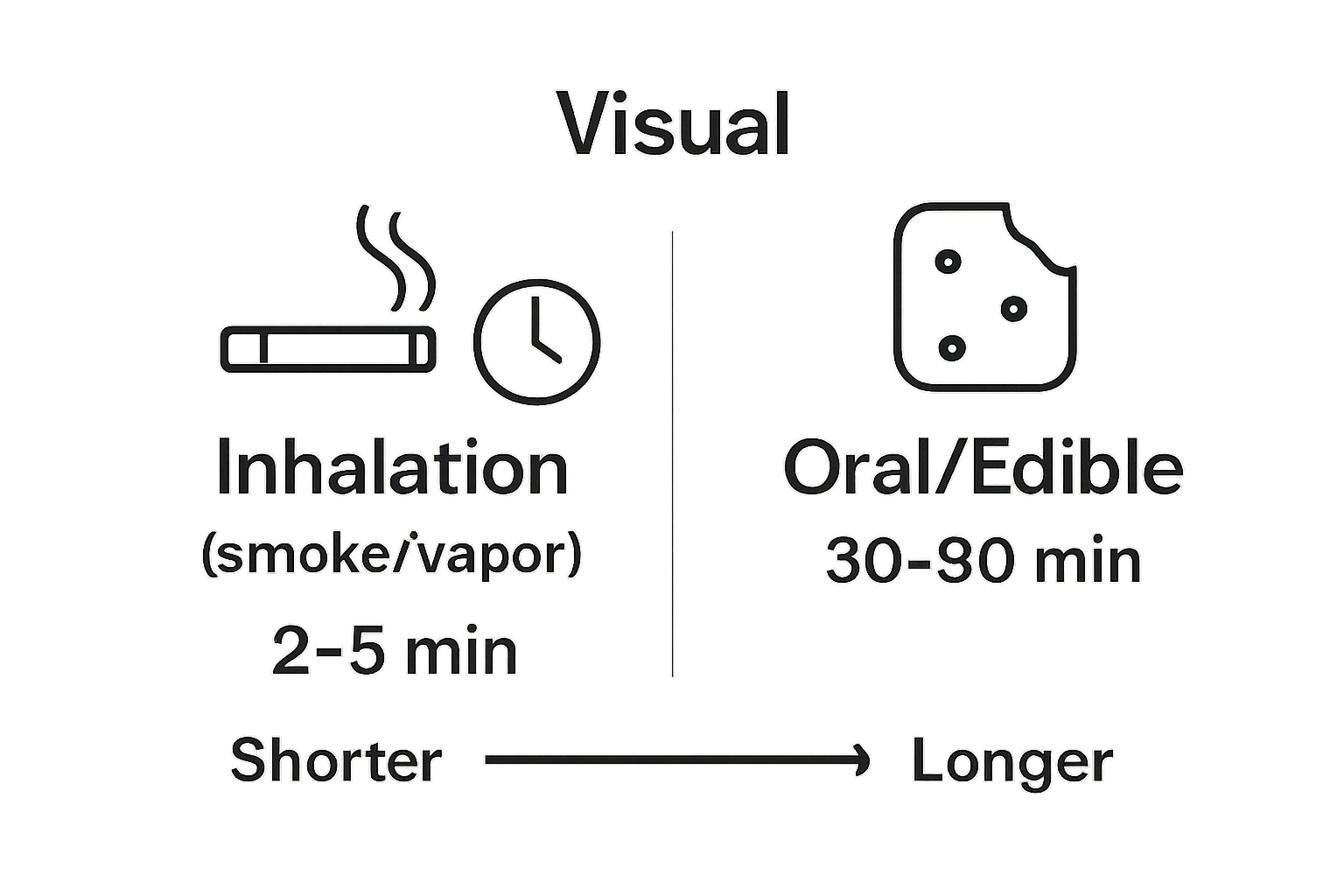
- Slower onset of effects (30-90 minutes)
- Extended duration of therapeutic impact
- More predictable and consistent cannabinoid absorption
- Greater potential for sustained symptom management
- Recommended for chronic condition treatment
To help consumers better understand product details, our guide on cannabis product labeling provides comprehensive insights into interpreting product information and dosage specifications.
Topical and Transdermal Applications
Topical cannabis products offer localized treatment without psychoactive effects, making them unique in the medical cannabis landscape. These products typically contain CBD or THC and are absorbed through the skin, providing targeted relief for specific areas of discomfort. Dosage for topical applications depends on concentration, application area, and individual skin absorption rates, presenting a distinct approach to medical cannabis administration.
To help clarify the main differences between medical cannabis product types and their dosage considerations, the following table compares key features of inhalation, oral/edible, and topical/transdermal methods.
| Method | Onset Time | Duration of Effect | Dosage Control | Key Advantages |
|---|---|---|---|---|
| Inhalation (Smoke/Vape) | 2-5 minutes | Shorter | Less precise | Immediate relief |
| Oral/Edible (Capsules, Oils) | 30-90 minutes | Extended | More predictable | Sustained therapeutic action |
| Topical/Transdermal | Varies | Localized/Varies | Based on application | Non-psychoactive, targeted relief |

Real-World Impact: Patient Experiences and Case Studies
Medical cannabis research extends beyond clinical trials, with patient experiences providing critical insights into real-world treatment effectiveness and dosage strategies. These personal narratives offer nuanced understanding of how medical cannabis impacts diverse health conditions.
Symptom Management and Quality of Life
Research analyzing self-reported patient data reveals remarkable findings about medical cannabis’s therapeutic potential. Across multiple medical conditions, patients reported significant symptom reductions:
- Mean symptom severity decreases between 2.8 and 4.6 points
- Positive side effects more commonly reported than negative
- Higher initial symptom levels associated with greater relief
- Improved overall quality of life measurements
- Potential alternative to traditional pharmaceutical treatments
Targeted Therapeutic Applications
Patient case studies demonstrate medical cannabis’s versatility in addressing complex health challenges. One notable example involves an 88-year-old patient with generalized anxiety disorder who experienced dramatic improvements through carefully managed cannabis oil treatments. The treatment reduced her symptomatic “wonky days” from three to four times per week to near elimination.
These individual experiences underscore the importance of personalized dosage strategies and professional medical guidance. While individual results vary, consistent themes emerge regarding medical cannabis’s potential to provide meaningful symptom management.
To better understand the broader context of medical cannabis applications, our comprehensive guide explores medical cannabis benefits and potential therapeutic uses across different health conditions.
Patient-Reported Outcomes and Treatment Efficacy
Patient interviews and longitudinal studies consistently highlight medical cannabis’s potential as a complementary or alternative treatment option. Patients frequently report substantial improvements in managing chronic pain, reducing anxiety, and enhancing overall functional capacity. These real-world insights complement clinical research, providing a more holistic understanding of medical cannabis’s therapeutic potential beyond controlled laboratory environments.
Take Control of Your Medical Cannabis Dosage Journey
Struggling to find the right medical cannabis dosage can feel overwhelming. You want relief and safety, but balancing these is not always simple. After learning about dosage titration, therapeutic windows, and the importance of precise administration, you deserve a trusted partner who makes your choices clearer and easier.
Discover our expertly curated medical cannabis products designed for every stage of your journey.
Ready to access premium, clearly labeled options that support your optimal dose? Visit Canna Quick Shop today and browse our detailed selection. Order now for safe, insured delivery and see why so many customers trust us for both quality and guidance.
Frequently Asked Questions
What factors influence medical cannabis dosage?
Medical cannabis dosage is influenced by individual physiological variations, including metabolic rate, body composition, genetic predispositions, and the method of administration. Additionally, existing medical conditions and lifestyle factors, such as stress levels and diet, play a crucial role in determining appropriate dosage.
How do I find the right dosage for medical cannabis?
To find the right dosage of medical cannabis, it is essential to start low and go slow. Gradually titrating the dosage while closely monitoring effects allows for the identification of the optimal therapeutic range for each individual. Consulting a healthcare provider for personalized guidance is also vital.
What are the different methods of cannabis administration and how do they affect dosage?
Cannabis can be administered through various methods, including inhalation (smoking or vaporizing), oral consumption (edibles, capsules, oils), and topical applications. Each method has different absorption rates and onset times, which impact dosage effectiveness. Inhaled cannabis provides rapid effects, while edibles have a slower onset but a longer duration of action.
Why is proper dosage important in medical cannabis use?
Proper dosage is crucial in medical cannabis use to maximize therapeutic benefits while minimizing side effects. Incorrect dosing can lead to insufficient relief or unwanted side effects, making it essential for patients to manage their dosage carefully and work with healthcare providers to ensure safe and effective treatment.
Recommended
- Cannabis Consumption Step by Step
- What is Medical Cannabis? Understanding Its Benefits and Uses
- Understanding Cannabis Product Labeling for Consumers
- Understanding Cannabis for Multiple Sclerosis
