

Uncategorized
What is Medical Cannabis? Understanding Its Benefits and Uses

Sep
Medical cannabis is taking center stage in modern healthcare as more doctors and patients search for safer treatment options. Surprising as it sounds, cannabinoids have shown strong potential for reducing chronic pain and inflammation according to scientific research. But medical cannabis is not simply a replacement for old medicines. What truly sets it apart is how it interacts with the body’s own endocannabinoid system, offering personalized relief in ways traditional drugs never could.
Table of Contents
- Defining Medical Cannabis: A Comprehensive Overview
- The Importance Of Medical Cannabis In Modern Healthcare
- How Medical Cannabis Works In The Human Body
- Key Compounds In Medical Cannabis And Their Effects
- Real-World Applications And Patient Experiences With Medical Cannabis
Quick Summary
| Takeaway | Explanation |
|---|---|
| Medical cannabis utilizes THC and CBD | These cannabinoids target specific medical conditions and their effects vary. THC is psychoactive; CBD is primarily therapeutic. |
| Effective for chronic pain management | Medical cannabis may offer a safer alternative to opioid treatments, providing pain relief with fewer side effects. |
| Supports treatment of neurological disorders | Patients report improvements in symptoms of conditions like MS and fibromyalgia through the use of medical cannabis. |
| Regulatory landscape varies by state | Laws governing medical cannabis vary widely, influencing its availability and usage across different regions. |
| Personalized approach to patient care | Treatment with medical cannabis should be tailored to individual needs, considering unique responses to cannabinoids. |
Defining Medical Cannabis: A Comprehensive Overview
Medical cannabis represents a sophisticated therapeutic approach utilizing the cannabis plant and its constituent cannabinoids for addressing various medical conditions. Research from the National Institutes of Health defines medical cannabis as the intentional use of cannabis plant material or its derivatives for medical and therapeutic purposes.
Chemical Composition and Therapeutic Potential
At the core of medical cannabis are two primary cannabinoids: tetrahydrocannabinol (THC) and cannabidiol (CBD). These compounds interact with the human body’s endocannabinoid system, which plays a crucial role in regulating physiological processes such as pain sensation, immune response, and mood.
Below is a comparison table highlighting the characteristics and effects of the two primary cannabinoids found in medical cannabis, THC and CBD, as discussed in the article.
| Cannabinoid | Psychoactive Effect | Primary Medical Uses | Interaction with ECS | Notable Side Effects |
|---|---|---|---|---|
| THC | Yes | Pain relief, appetite stimulation, nausea control | Binds mainly to CB1 | Euphoria, altered senses |
| CBD | No | Anxiety reduction, inflammation control, seizure management | Modulates CB1/CB2, indirect | Minimal, mild drowsiness |
Key characteristics of medical cannabis include:
- Targeted treatment for specific medical conditions
- Potential reduction of inflammation
- Management of chronic pain
- Potential neurological disorder symptom management
Legal and Medical Context
Medical cannabis operates within a complex regulatory landscape. Different states have varying laws regarding its prescription, distribution, and use. Healthcare professionals typically recommend medical cannabis after carefully evaluating a patient’s specific medical history and potential treatment outcomes. Learn more about cannabis product labeling to understand how medical professionals and manufacturers communicate product details and therapeutic potential.
Understanding medical cannabis requires recognizing its nuanced role in modern healthcare. It represents not just a singular treatment but a potential complementary approach to managing various medical conditions, with ongoing research continually expanding our comprehension of its therapeutic applications.
The Importance of Medical Cannabis in Modern Healthcare
Medical cannabis has emerged as a significant therapeutic approach in contemporary healthcare, offering potential alternatives for managing complex medical conditions. Research from the National Academies of Sciences provides substantial evidence supporting its therapeutic potential, particularly in chronic pain management and treatment of various medical disorders.
Pain Management and Treatment Alternatives
One of the most critical roles of medical cannabis in modern healthcare is its potential to address chronic pain without the extensive side effects associated with traditional pharmaceutical treatments. Cannabinoids demonstrate remarkable capabilities in reducing inflammation and modulating pain responses, offering patients a potentially safer alternative to traditional opioid-based pain management strategies. Explore our guide on cannabis delivery options to understand how patients can access these innovative treatment methods.
Key therapeutic applications of medical cannabis include:
- Chronic pain management
- Reduction of inflammatory responses
- Potential neurological symptom mitigation
- Alternative treatment for patients resistant to conventional medications
Expanding Medical Research and Treatment Protocols
The integration of medical cannabis into healthcare represents a paradigm shift in treatment approaches. Medical professionals are increasingly recognizing its potential in addressing conditions that have traditionally been challenging to treat. Research continues to explore its efficacy in managing complex medical scenarios, including neurological disorders, mental health conditions, and treatment-resistant symptoms.
Modern healthcare is progressively viewing medical cannabis not as an alternative medicine, but as a legitimate and scientifically-backed treatment option. Its ability to interact with the human endocannabinoid system provides a unique approach to addressing various physiological and neurological challenges, marking a significant advancement in personalized medical care.
How Medical Cannabis Works in the Human Body
Medical cannabis interacts with the human body through a sophisticated biological mechanism centered on the endocannabinoid system. Research from the National Institutes of Health reveals that cannabis compounds primarily engage with specialized cannabinoid receptors, creating complex physiological responses that can modulate various bodily functions.
The Endocannabinoid System and Receptor Interactions
The endocannabinoid system comprises a network of receptors distributed throughout the human body, primarily categorized as CB1 and CB2 receptors. These receptors play crucial roles in regulating numerous physiological processes, including pain sensation, immune response, mood, and metabolic functions. Learn more about cannabinoid science to understand the intricate mechanisms behind these interactions.
Key receptor interaction characteristics include:
- CB1 receptors predominantly located in the brain and central nervous system
- CB2 receptors primarily found in immune cells and peripheral tissues
- Cannabinoids can modulate neurotransmitter release
- Potential regulation of inflammatory responses
Physiological Response and Therapeutic Mechanisms
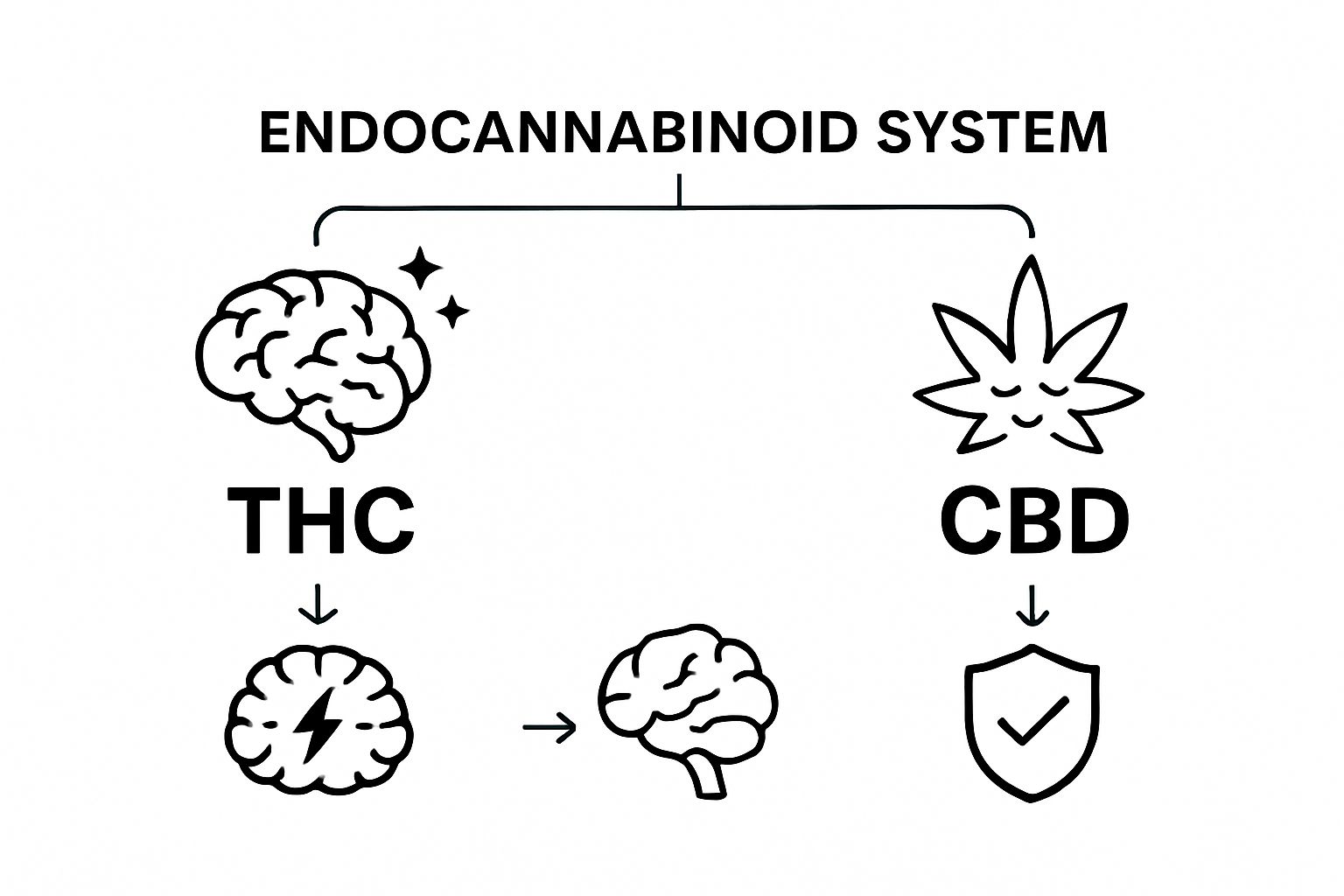
When medical cannabis compounds like THC and CBD interact with these receptors, they trigger a cascade of biological responses. THC typically binds directly to CB1 receptors, producing psychoactive effects, while CBD demonstrates a more nuanced interaction, potentially mitigating some of THC’s intense psychological impacts. These interactions can result in various therapeutic outcomes, such as pain reduction, anxiety management, and potential neurological symptom alleviation.
The complexity of medical cannabis’s interaction with the human body underscores its potential as a multifaceted therapeutic approach. By engaging with the endocannabinoid system, cannabis compounds offer a unique pathway for addressing medical conditions that traditional pharmaceuticals might struggle to treat effectively.
Key Compounds in Medical Cannabis and Their Effects
Research from the National Institute on Drug Abuse reveals that medical cannabis contains multiple complex compounds, with two primary cannabinoids playing critical roles in its therapeutic potential. These compounds create a sophisticated interaction within the human body, offering diverse medical applications.
Primary Cannabinoids: THC and CBD
Tetrahydrocannabinol (THC) represents the primary psychoactive compound in medical cannabis, responsible for producing the characteristic “high” sensation. However, its therapeutic potential extends far beyond its psychological effects. THC demonstrates significant capabilities in pain management, appetite stimulation, and reducing nausea. Explore our detailed guide on cannabinoid science to understand the intricate mechanisms of these compounds.
Key characteristics of primary cannabinoids include:
- THC binding directly with CB1 receptors in the brain
- CBD providing non-psychoactive therapeutic benefits
- Potential modulation of pain and inflammatory responses
- Varied interactions with the endocannabinoid system
Additional Therapeutic Cannabinoids
Cannabidiol (CBD) offers a fascinating alternative to THC, providing therapeutic benefits without inducing psychoactive effects. CBD has garnered significant medical research interest for its potential in managing anxiety, reducing inflammation, and potentially mitigating seizure disorders. Unlike THC, CBD interacts more subtly with the body’s receptors, offering a nuanced approach to medical treatment.
Beyond THC and CBD, medical cannabis contains numerous other cannabinoids like CBG (Cannabigerol) and CBC (Cannabichromene), each presenting unique potential therapeutic properties. These compounds work synergistically, creating what researchers call the “entourage effect,” where multiple cannabinoids combined potentially provide more comprehensive medical benefits than isolated compounds.
Real-World Applications and Patient Experiences with Medical Cannabis
Research published in the journal Cureus highlights the growing body of real-world evidence demonstrating medical cannabis’s practical therapeutic applications across various medical conditions. Patient experiences reveal a nuanced landscape of potential medical interventions beyond traditional pharmaceutical treatments.
Chronic Pain and Neurological Condition Management
Medical cannabis has emerged as a significant alternative for patients struggling with chronic pain and complex neurological conditions. Individuals suffering from conditions like multiple sclerosis, fibromyalgia, and neuropathic pain have reported substantial improvements in symptom management. Learn more about cannabis applications for specific conditions to understand the targeted therapeutic potential.
Key patient-reported benefits include:
- Reduction in chronic pain intensity
- Improved sleep quality
- Decreased muscle spasticity
- Enhanced overall quality of life
- Reduced dependency on traditional pain medications
Mental Health and Symptom Management
Patients have increasingly turned to medical cannabis for managing mental health challenges, including anxiety, PTSD, and depression. The non-psychoactive components like CBD demonstrate promising potential in providing relief without the intense psychological effects associated with traditional cannabis consumption. Patients report more balanced emotional states and reduced anxiety symptoms, suggesting medical cannabis as a complementary approach to mental health treatment.
Beyond individual symptom management, medical cannabis represents a personalized medicine approach. Each patient’s experience varies, reflecting the complex interactions between cannabinoids and individual physiological systems.
To clarify how medical cannabis supports various health conditions, the following table organizes reported real-world therapeutic benefits across different patient experiences as described in the article.
| Health Condition | Reported Benefit from Medical Cannabis | Patient Outcomes |
|---|---|---|
| Chronic Pain | Pain intensity reduction | Decreased pain, less opioid dependence |
| Multiple Sclerosis (MS) | Reduced muscle spasticity, pain relief | Improved mobility, better quality of life |
| Fibromyalgia | Pain reduction, enhanced sleep quality | Improved daily functioning |
| Neuropathic Pain | Symptom relief | Decreased discomfort |
| Anxiety/PTSD/Depression | Emotional stability, reduced anxiety | More balanced mood, symptom improvement |

Ready to Experience the Benefits of Medical Cannabis for Yourself?
Learning about the science behind medical cannabis and its therapeutic uses is just the first step. Many readers struggle to find a trusted partner who can connect them to the right products for symptom management, pain reduction, or improved quality of life. If you want a safe, reliable place to start your journey, explore the wide range of options available at Canna Quick Shop. Browse our marketplace for high-quality buds, edibles, concentrates, vapes, and more, all backed by fast, insured delivery and a strong reputation for customer satisfaction. For beginners or those seeking further guidance, our user-friendly Uncategorized section highlights educational resources and updated product insights to help you make the best choice for your needs.

Take the next step toward better symptom management and convenience. Visit Canna Quick Shop now and discover how premium medical cannabis products can personalize your health and wellness routine. Don’t wait to feel the difference that expertly sourced cannabis can make in your everyday life.
Frequently Asked Questions
What is medical cannabis?
Medical cannabis is the use of the cannabis plant and its cannabinoids for medical and therapeutic purposes, aimed at addressing various medical conditions and symptoms.
How does medical cannabis work in the body?
Medical cannabis interacts with the endocannabinoid system through receptors (CB1 and CB2) distributed throughout the body, modulating physiological processes such as pain sensation, mood, and immune responses.
What are the primary cannabinoids found in medical cannabis?
The two primary cannabinoids in medical cannabis are tetrahydrocannabinol (THC), which is psychoactive, and cannabidiol (CBD), which offers therapeutic benefits without causing a high sensation.
What conditions can medical cannabis potentially help treat?
Medical cannabis shows potential in treating chronic pain, reducing inflammation, managing neurological disorders, and alleviating symptoms of mental health conditions such as anxiety and PTSD.
Recommended
- Understanding Cannabis for Multiple Sclerosis
- Why Use Cannabis Edibles
- A Simple Blog PostEverything you need to know about Cannabinoid (CBG)
- What is Weed Delivery? Understanding Cannabis Delivery Services
