

Uncategorized
Understanding Cannabis Packaging Regulations

Sep
Cannabis packaging rules are changing how you buy and consume marijuana. States now demand things like child-resistant packaging and bold warning labels on every single product. Most people assume these rules are just extra red tape. The real surprise is that these regulations are quietly shaping which products make it to your hands—and how safe you and your family actually are.
Table of Contents
- What Are Cannabis Packaging Regulations?
- Why Cannabis Packaging Regulations Matter
- How Cannabis Packaging Regulations Work
- Key Concepts In Cannabis Packaging Compliance
- The Impact Of Packaging Regulations On Consumers
Quick Summary
| Takeaway | Explanation |
|---|---|
| Child-resistant packaging is mandatory. | All cannabis products must use packaging that prevents children’s access to ensure safety. |
| Clear labeling is essential. | Cannabis products must include detailed information about THC/CBD content, origin, and health risks for informed consumer choices. |
| Compliance varies by location. | Cannabis laws differ from state to state; businesses must understand local regulations for proper compliance. |
| Tamper-evident seals ensure integrity. | Seal requirements help protect consumers by confirming that products have not been altered or contaminated. |
| Packaging regulations enhance consumer trust. | These regulations provide transparency and safety, fostering trust and informed decisions among consumers. |
What Are Cannabis Packaging Regulations?
Cannabis packaging regulations are comprehensive legal guidelines designed to ensure consumer safety, product transparency, and responsible distribution of marijuana products. These regulations establish strict standards for how cannabis items must be packaged, labeled, and presented to the public, with primary emphasis on preventing accidental consumption and protecting vulnerable populations.
Consumer Protection and Safety Standards
The core purpose of cannabis packaging regulations revolves around protecting consumers, particularly children and minors. Regulations from the FDA mandate specific design requirements that minimize potential risks associated with cannabis product storage and handling. These safety standards typically include:
- Child-resistant packaging that prevents easy access by young children
- Clear and prominent warning labels about potential health risks
- Tamper-evident seals to ensure product integrity
- Detailed ingredient and potency information
Manufacturers must design packaging that is not only secure but also complies with state-specific guidelines, which can vary significantly across different jurisdictions.
The following table summarizes the core features and requirements commonly found in cannabis packaging regulations, helping clarify their role in consumer safety and transparency.
| Feature/Requirement | Purpose | Example/Detail |
|---|---|---|
| Child-resistant packaging | Prevents access by children and minors | Special locking mechanisms or closures |
| Tamper-evident seals | Ensures product integrity | Seal breaks if product is opened or altered |
| Warning labels | Alerts consumers to health risks and side effects | Bold, visible language about THC and potential harm |
| Opaque containers | Limits product visibility to reduce appeal | Cannot see contents without opening the package |
| Detailed ingredient/potency info | Informs buyers of product contents and strength | THC/CBD percentages, batch numbers provided |
| Universal warning symbols | Standardizes safety messaging across all products | Icons indicating not safe for children |
This means cannabis companies must be well-versed in local regulations to ensure full compliance.
Packaging Design and Labeling Requirements
Beyond safety considerations, cannabis packaging regulations dictate precise labeling protocols. Products must display comprehensive information including THC and CBD content, origin of cultivation, recommended dosage, and potential side effects. Packaging must be opaque, resealable, and include specific warning symbols that communicate potential risks.
Interested consumers can read more about cannabis product labeling to gain deeper insights into these intricate requirements. The goal is to create packaging that is informative, transparent, and responsible, enabling consumers to make educated decisions about their cannabis consumption.
Why Cannabis Packaging Regulations Matter
Cannabis packaging regulations are far more than bureaucratic requirements. They represent a critical intersection of public health, consumer protection, and responsible product management. These regulations play a vital role in safeguarding communities and ensuring that cannabis products are distributed safely and transparently.
Protecting Public Health and Safety
According to research from the World Health Organization, comprehensive packaging regulations are essential in mitigating potential health risks associated with cannabis consumption. The primary objectives focus on preventing unintended exposure and minimizing potential harm. These protective measures include:
- Preventing accidental ingestion by children
- Clearly communicating potential health risks
- Ensuring product quality and integrity
- Limiting product appeal to vulnerable populations
By establishing strict packaging standards, regulatory bodies create a framework that prioritizes consumer well-being and reduces potential public health complications.
This table compares the primary objectives of cannabis packaging regulations to illustrate how they benefit both consumers and businesses.
| Objective | Benefit to Consumers | Benefit to Businesses |
|---|---|---|
| Prevent accidental ingestion | Protects children and vulnerable groups | Reduces liability and risk |
| Ensure product quality and integrity | Reduces risk of contamination or tampering | Promotes consumer trust and loyalty |
| Communicate health risks | Keeps users informed about side effects | Demonstrates regulatory compliance |
| Standardize transparency | Allows informed purchase decisions | Supports industry legitimacy |
Legal Compliance and Consumer Transparency
Packaging regulations serve as a critical communication tool between cannabis producers and consumers. They mandate comprehensive product information, ensuring individuals have access to essential details about potency, ingredients, and potential effects. Our guide on cannabis quality assurance provides additional insights into these important standards.
Moreover, these regulations help cannabis businesses maintain legal compliance, reducing the risk of penalties and supporting the industry’s ongoing legitimization. By adhering to packaging requirements, companies demonstrate their commitment to responsible product distribution and consumer safety.
How Cannabis Packaging Regulations Work
Cannabis packaging regulations operate through a complex system of federal, state, and local guidelines designed to standardize product safety, consumer protection, and responsible distribution. These regulations create a comprehensive framework that governs every aspect of cannabis product packaging, from design and materials to labeling and information disclosure.
Regulatory Compliance Mechanisms
California’s cannabis packaging regulations provide an excellent example of how these standards function in practice. Regulatory bodies establish specific requirements that manufacturers must meet, including:
- Child-resistant packaging with specialized mechanisms
- Opaque containers preventing product visibility
- Tamper-evident seals ensuring product integrity
- Clear warning labels with mandatory health information
Manufacturers must submit detailed packaging designs for approval, demonstrating compliance with each regulatory requirement. This process ensures that only products meeting strict safety standards enter the market.
Technical Packaging Requirements
Technical specifications form the backbone of cannabis packaging regulations. These guidelines dictate precise parameters for packaging materials, design elements, and informational content. Manufacturers must use materials that protect product quality, prevent contamination, and resist environmental degradation.
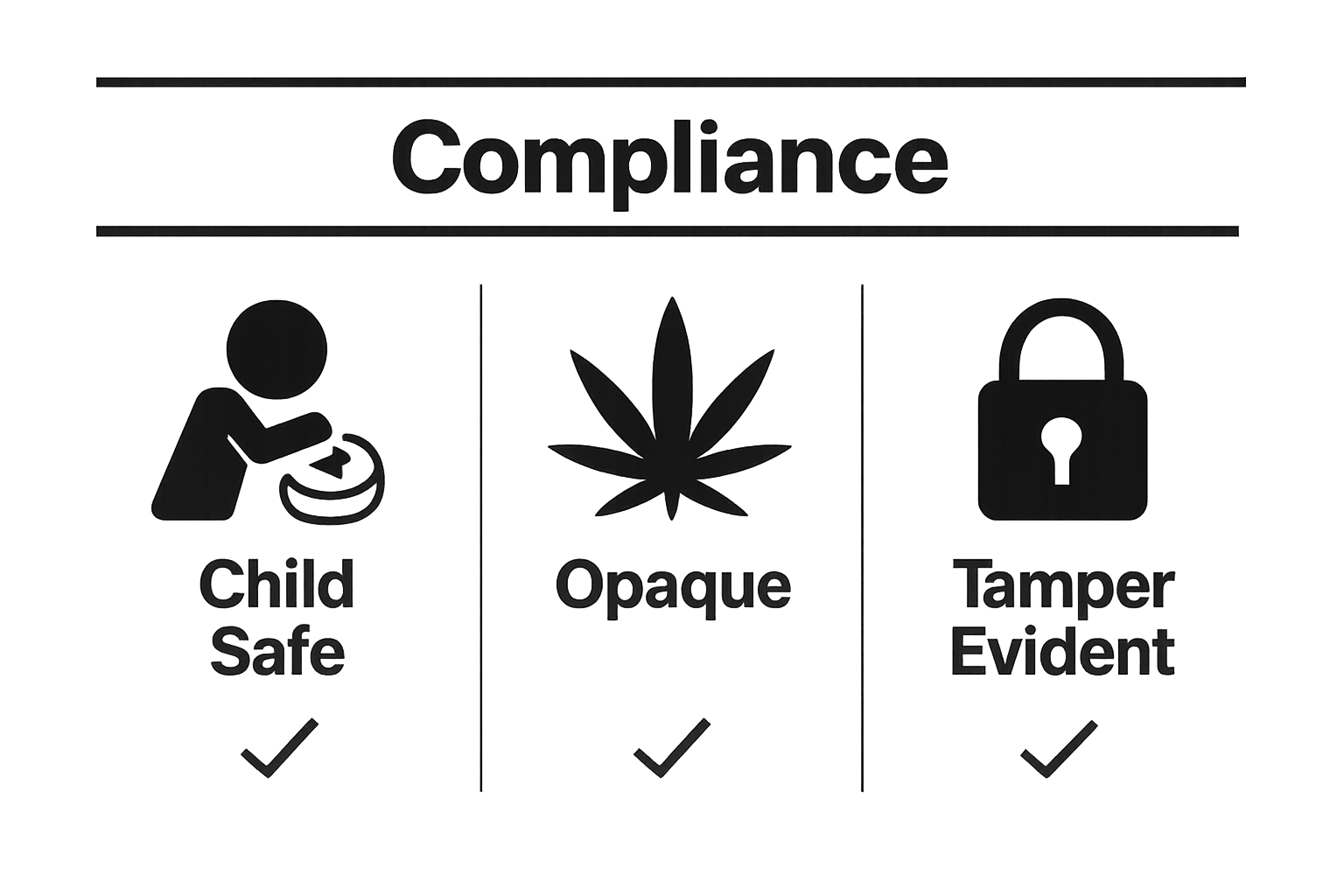
Each package must include comprehensive details such as THC/CBD content, cultivation origin, batch numbers, and potential health warnings. Learn more about cannabis delivery zones to understand how these regulations extend beyond packaging into product distribution. The intricate regulatory framework aims to create a transparent, safe environment for cannabis consumers while preventing misuse and accidental exposure.
Key Concepts in Cannabis Packaging Compliance
Cannabis packaging compliance represents a complex regulatory landscape that demands meticulous attention to detail and comprehensive understanding of multiple legal requirements. These regulations go beyond simple packaging design, encompassing critical considerations that protect public health, ensure consumer safety, and maintain industry integrity.
Essential Regulatory Components
According to the National Conference of State Legislatures, cannabis packaging compliance involves several fundamental components that manufacturers must consistently address. These key elements include:
- Child-resistant mechanisms that prevent unauthorized access
- Comprehensive product information disclosure
- Clear health and safety warning labels
- Standardized universal warning symbols
- Specific material and design restrictions
These regulatory requirements are not merely bureaucratic checkboxes but critical safeguards designed to mitigate potential risks associated with cannabis product distribution and consumption.

Information Transparency and Consumer Protection
Packaging compliance demands complete transparency about product contents, potency, and potential health implications. Manufacturers must provide detailed information including precise cannabinoid percentages, batch tracking numbers, cultivation details, and explicit health warnings. Our guide on cannabis delivery further explores how these compliance standards extend throughout the entire product distribution process.
The ultimate goal of these rigorous packaging regulations is to create a standardized, safe environment that empowers consumers with accurate information while preventing potential misuse or accidental exposure. By establishing clear, comprehensive guidelines, regulatory bodies aim to balance product accessibility with responsible consumption practices.
The Impact of Packaging Regulations on Consumers
Cannabis packaging regulations profoundly transform consumer experience, perception, and interaction with cannabis products. These guidelines extend far beyond mere administrative requirements, fundamentally reshaping how individuals understand, select, and consume cannabis across medical and recreational markets.
Consumer Information and Risk Awareness
Research published in PubMed demonstrates that packaging regulations significantly influence consumer perception of cannabis products. The study reveals critical insights into how packaging design impacts consumer understanding and risk assessment:
- Detailed health warning labels increase awareness of potential risks
- Plain packaging reduces product appeal
- Comprehensive ingredient information enables informed decisions
- Standardized packaging promotes transparency
These regulatory approaches empower consumers by providing clear, unambiguous information about product contents, potency, and potential health implications. By mandating comprehensive labeling, packaging regulations transform cannabis from a potentially mysterious product into a transparent, well-understood commodity.
Protection and Responsible Consumption
Packaging regulations serve as a crucial mechanism for protecting vulnerable populations, particularly youth and inexperienced consumers. The requirements for child-resistant packaging, explicit warning symbols, and restricted design elements create multiple layers of safety. Learn more about cannabis delivery standards to understand how these protective measures extend beyond packaging.
Ultimately, these regulations represent a sophisticated approach to consumer protection, balancing individual freedom with public health considerations. By providing clear, standardized information and implementing safety mechanisms, packaging regulations help consumers make more informed, responsible choices about cannabis consumption.
Upgrade Your Cannabis Buying Experience With Trusted Packaging Compliance
Confused about complicated cannabis packaging regulations or worried about product safety? At Canna Quick Shop, we understand that keeping up with legal requirements, ensuring child-resistant packaging, and decoding label information can create anxiety for any consumer. You want peace of mind and clear, accurate details when selecting your cannabis products.
Explore our selection in the Uncategorized – Canna Quick Shop section, where each item meets or exceeds the most current packaging standards for quality and safety.
Take control of your cannabis experience today. Shop confidently on Canna Quick Shop, where every product delivers transparency, security, and reliable fast delivery. Your safety matters. Visit us now to enjoy premium cannabis and accessories with packaging that protects what is important to you.
Frequently Asked Questions
What are the main purposes of cannabis packaging regulations?
Cannabis packaging regulations are designed to ensure consumer safety, product transparency, and responsible distribution. They focus on preventing accidental consumption, particularly by children, and ensuring products are clearly labeled with important information.
What are some key safety features required in cannabis packaging?
Key safety features required by cannabis packaging regulations include child-resistant mechanisms to prevent easy access by children, tamper-evident seals to ensure product integrity, and clear, prominent warning labels about health risks associated with consumption.
What information must be included on cannabis product labels?
Cannabis product labels must include detailed information such as THC and CBD content, the origin of cultivation, recommended dosage, potential side effects, and clear health warnings to inform consumers about the risks of use.
How do cannabis packaging regulations protect public health?
These regulations protect public health by preventing accidental ingestion, clearly communicating potential health risks, ensuring product quality and integrity, and limiting the appeal of cannabis products to vulnerable populations such as minors.
Recommended
- Understanding Cannabis Product Labeling for Consumers – Canna Quick Shop
- Cookies Carts-500mg | Cookies Original Vape Carts- Canna Quick Shop
- Understanding Cannabis Quality Assurance Explained – Canna Quick Shop
- Live Resin Terpenes Mac 1 | 5ml – Canna Quick Shop
