

Uncategorized
Understanding Cannabis for Multiple Sclerosis: What You Need to Know

Aug
Cannabis is often talked about for its mind-altering effects and growing medical interest. Yet, most people have no idea that this plant actually contains over 500 different compounds working together in complex ways inside the body. It sounds wild, but the real surprise is how just two main components, THC and CBD, can lead to entirely different experiences and health outcomes for people with multiple sclerosis.
Table of Contents
- What Is Cannabis And Its Components?
- The Role Of Cannabis In Managing Multiple Sclerosis Symptoms
- How Cannabis Affects The Body: The Endocannabinoid System
- Potential Benefits And Risks Of Using Cannabis For MS
- Current Research And Perspectives On Cannabis For Multiple Sclerosis
Quick Summary
| Takeaway | Explanation |
|---|---|
| Cannabinoids interact with the endocannabinoid system | THC and CBD bind to receptors, influencing pain, inflammation, and other physiological processes. |
| Cannabis can alleviate multiple sclerosis symptoms | Patients report reduced muscle spasticity, chronic pain, and improved sleep quality through cannabis use. |
| Individual responses to cannabis vary | Factors such as dosage, strain, and personal health can affect therapeutic outcomes and side effects. |
| Consult healthcare professionals before use | Medical guidance is crucial to manage potential interactions and ensure safe cannabis consumption. |
| Ongoing research is essential | Continued investigations are needed to establish effective treatment protocols and understand risks associated with cannabis use. |
What is Cannabis and Its Components?
Cannabis is a complex plant with a rich pharmacological profile, containing hundreds of chemical compounds that interact with the human body in unique ways. Understanding its core components provides crucial insights into its potential therapeutic applications, especially for conditions like multiple sclerosis.
The Primary Cannabinoids
At the heart of cannabis are cannabinoids, a group of chemical compounds that interact with the body’s endocannabinoid system. According to research from the National Center for Biotechnology Information, the two most significant cannabinoids are:
- Tetrahydrocannabinol (THC), which produces psychoactive effects
- Cannabidiol (CBD), a non-intoxicating compound with potential therapeutic benefits
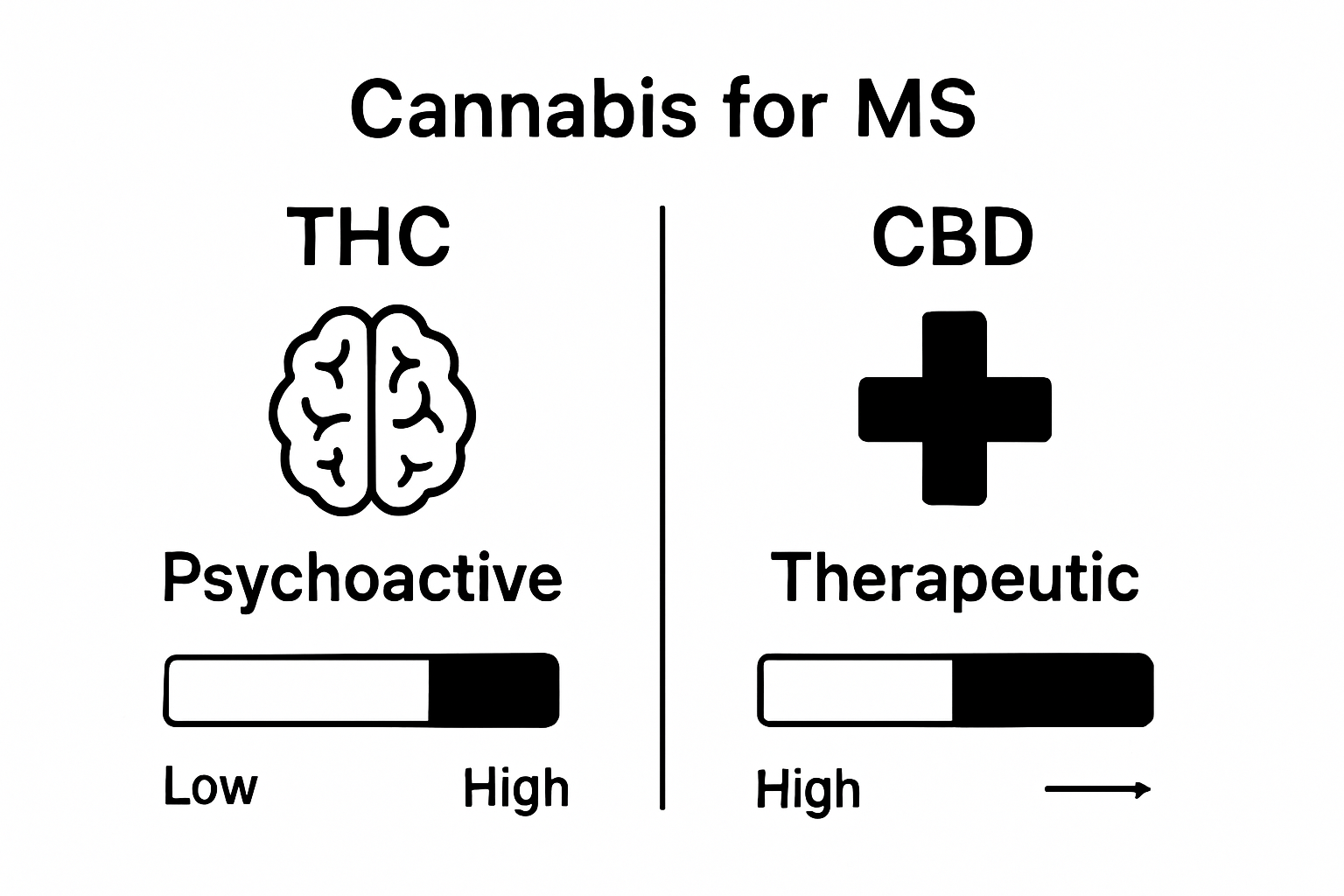
THC is responsible for the “high” associated with cannabis, while CBD has gained significant attention for its potential medical applications without causing intoxication. These compounds interact with cannabinoid receptors CB1 and CB2, located throughout the human nervous system and immune cells.
Below is a comparison table summarizing the characteristics, effects, and roles of the two primary cannabinoids found in cannabis: THC and CBD.
| Cannabinoid | Psychoactive Effects | Therapeutic Potential | Interaction with Receptors | Common Role in MS Management |
|---|---|---|---|---|
| THC | Yes | Pain relief, muscle spasticity | Binds primarily to CB1 receptors | Helps alleviate pain and reduce spasticity |
| CBD | No | Anti-inflammatory, pain relief, neuroprotection | Modulates CB1 and CB2 receptors | Reduces inflammation, aids pain management |
How Cannabinoids Function
Cannabinoids work by binding to specific receptors in the body’s endocannabinoid system, which plays a critical role in regulating various physiological processes. For individuals with multiple sclerosis, these interactions can potentially help manage symptoms like muscle spasticity, pain, and inflammation.
The complexity of cannabis goes beyond just THC and CBD. Scientific research indicates that cannabis contains over 500 identified compounds, including minor cannabinoids like Cannabigerol (CBG) that might offer additional therapeutic potential.
Understanding these components is crucial for patients considering cannabis as a potential treatment option. Learn more about our comprehensive guide to cannabis consumption safety.
The Role of Cannabis in Managing Multiple Sclerosis Symptoms
Multiple sclerosis presents complex neurological challenges that traditional treatments often struggle to address comprehensively. Cannabis has emerged as a potential therapeutic option offering relief for several debilitating MS symptoms, providing hope for patients seeking alternative management strategies.
Symptom Management Mechanisms
Cannabis interacts with the body’s endocannabinoid system to potentially alleviate multiple sclerosis symptoms through several critical pathways. Research from a landmark clinical study demonstrates significant improvements in key areas:
- Reducing muscle spasticity
- Decreasing chronic pain
- Improving sleep quality
- Managing neurological inflammation
The cannabinoids THC and CBD play crucial roles in modulating neurological responses, with CBD showing particular promise in reducing inflammation and managing pain without psychoactive effects.
Neurological Impact and Treatment Potential
For MS patients, cannabis offers a multifaceted approach to symptom management. The compounds interact directly with neurological receptors, potentially helping to regulate nerve signaling and reduce the intensity of muscular and neurological disruptions characteristic of multiple sclerosis.
While not a cure, cannabis demonstrates potential in providing symptomatic relief and improving overall quality of life. Patients report reduced muscle rigidity, decreased pain sensation, and improved mobility when utilizing targeted cannabis treatments.

Important Considerations: Not all cannabis treatments are identical. Dosage, strain selection, and individual physiological responses can significantly impact therapeutic outcomes. Explore our comprehensive guide to safe cannabis consumption to understand how to approach medical cannabis responsibly and effectively.
How Cannabis Affects the Body: The Endocannabinoid System
The human body contains a sophisticated biological system known as the endocannabinoid system, which plays a critical role in maintaining physiological balance and regulating numerous internal processes. This complex network of receptors, enzymes, and naturally occurring cannabinoids works as a sophisticated communication mechanism within our nervous system.
Understanding Cannabinoid Receptors
Research from the National Institutes of Health reveals that the endocannabinoid system contains two primary receptor types critical for understanding how cannabis interacts with human physiology:
- CB1 Receptors: Predominantly located in the brain and central nervous system
- CB2 Receptors: Primarily found in peripheral organs and immune cells
These receptors act like sophisticated locks, with cannabinoids serving as unique keys that can trigger specific physiological responses. When cannabinoids from cannabis bind to these receptors, they can potentially modulate pain perception, immune function, and neurological signaling.
Neurological and Physiological Interactions
For individuals with multiple sclerosis, the endocannabinoid system becomes particularly significant. Cannabis compounds interact with these receptors to potentially reduce neurological inflammation, manage pain signals, and provide neuroprotective effects. The interaction goes beyond simple symptom management, suggesting a more nuanced approach to neurological health.
The body produces its own endocannabinoids naturally, but external cannabinoids from cannabis can supplement or enhance these processes. This interaction explains why cannabis might offer therapeutic potential for conditions involving neurological dysfunction.
Important Note: Individual responses to cannabis can vary significantly. Learn more about safe cannabis consumption practices to understand how to approach medical cannabis responsibly and effectively.
Potential Benefits and Risks of Using Cannabis for MS
Navigating the therapeutic landscape of cannabis for multiple sclerosis requires a balanced understanding of its potential advantages and potential drawbacks. While cannabis offers promising symptom management strategies, patients must approach its use with careful consideration and professional medical guidance.
This table outlines the key potential benefits and risks of using cannabis for multiple sclerosis, helping readers easily weigh both sides when considering its use for symptom management.
| Potential Benefit | Brief Explanation |
|---|---|
| Reduces muscle spasticity | Helps to decrease involuntary muscle stiffness |
| Manages chronic pain | Alleviates persistent nerve and muscle pain |
| Improves sleep quality | May aid restful sleep and reduce sleep disturbances |
| Decreases neurological inflammation | Can lessen swelling and immune responses |
| Possible neuroprotective effect | Might protect nervous system cells from damage |
| Potential Risk | Brief Explanation |
|---|---|
| Cognitive function alterations | May impact thinking and mental processing |
| Short term memory impairment | Can cause trouble remembering recent events |
| Possible balance and mobility issues | Could worsen balance and coordination |
| Drug interaction risk | May interact with other prescribed medications |
| Individual variability | Effects can differ greatly between individuals |
Therapeutic Benefits
Research from a comprehensive neurological review highlights several significant potential benefits for MS patients:
- Reduction of muscle spasticity
- Chronic pain management
- Potential improvements in sleep quality
- Decreased neurological inflammation
- Possible neuroprotective effects
Cannabis compounds, particularly CBD and THC, interact with the nervous system to potentially mitigate some of the most challenging symptoms associated with multiple sclerosis. The ability to address multiple symptom domains simultaneously makes cannabis an intriguing therapeutic option.
Potential Risks and Considerations
Despite promising therapeutic potential, cannabis use for MS is not without potential complications. Patients must be aware of possible adverse effects and individual variability in response. Potential risks include:
- Cognitive function alterations
- Short term memory impairment
- Potential balance and mobility challenges
- Possible interactions with existing medications
- Individual variations in physiological response
Important Guidance: Medical cannabis is not a universal solution. Individual responses vary significantly, and patients should always consult healthcare professionals before incorporating cannabis into their treatment regimen. Explore our comprehensive guide to safe cannabis consumption to understand responsible usage strategies and potential interactions.
Current Research and Perspectives on Cannabis for Multiple Sclerosis
Medical research surrounding cannabis and multiple sclerosis continues to evolve, offering increasingly nuanced insights into potential therapeutic applications. The scientific community is actively investigating the complex interactions between cannabinoids and neurological systems, seeking comprehensive understanding of cannabis’s role in MS management.
Emerging Scientific Perspectives
Research published in recent neurological studies reveals compelling findings about cannabis’s potential in MS treatment:
- Potential short term cognitive symptom amelioration
- Possible neuroprotective mechanisms
- Demonstrable pain and spasticity reduction
- Promising alternatives to traditional pharmaceutical interventions
Scientific investigations suggest that cannabinoids may interact with the nervous system in ways that could provide symptomatic relief, though researchers emphasize the need for continued rigorous research to establish definitive treatment protocols.
Clinical Evidence and Research Challenges
While preliminary studies show promise, the scientific community remains cautious. Researchers recognize the complexity of MS and the variability of individual patient responses to cannabis treatments. Key research challenges include:
- Developing standardized treatment protocols
- Understanding long term physiological impacts
- Determining optimal cannabinoid ratios
- Identifying potential interaction risks with existing medications
Important Context: The research landscape continues to evolve, with scientists seeking comprehensive understanding of cannabis’s therapeutic potential. Learn more about safe cannabis consumption practices to stay informed about the latest scientific perspectives and recommendations.
Discover Safe, Effective Cannabis Solutions for MS Relief
Are you seeking real relief from the daily challenges of multiple sclerosis, like muscle spasticity, nerve pain, and disrupted sleep? You have learned how cannabinoids such as THC and CBD interact with your nervous system to help manage these symptoms. Now it is time to experience the benefits of carefully selected cannabis products, all backed by reliable delivery and safety standards.

Take the next step with confidence. Visit Canna Quick Shop to browse high-quality cannabis products designed for your needs and explore our trusted resources on cannabis consumption safety. Find the right option for your MS management today and start feeling the support you deserve.
Frequently Asked Questions
What are the primary cannabinoids in cannabis?
Cannabis primarily contains two significant cannabinoids: Tetrahydrocannabinol (THC), which is responsible for the psychoactive effects, and Cannabidiol (CBD), a non-intoxicating compound known for its potential therapeutic benefits.
How does cannabis help manage multiple sclerosis symptoms?
Cannabis interacts with the endocannabinoid system to potentially alleviate symptoms of multiple sclerosis, such as muscle spasticity, chronic pain, and neurological inflammation, improving overall quality of life for patients.
Are there risks associated with using cannabis for MS treatment?
Yes, potential risks include cognitive function alterations, short-term memory impairment, and possible interactions with existing medications. It’s essential for patients to consult healthcare professionals before starting cannabis treatment.
What is the endocannabinoid system and its role in cannabis effects?
The endocannabinoid system is a complex network in the human body that regulates physiological balance. Cannabinoids from cannabis interact with specific receptors in this system to modulate pain perception, immune function, and neurological signaling.
Recommended
- Understanding Cannabis Consumption Safety and Its Importance
- Why Use Cannabis Edibles
- 7 Types of Cannabis Edibles You Should Know About
- A Simple Blog PostEverything you need to know about Cannabinoid (CBG)
